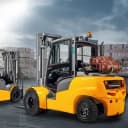
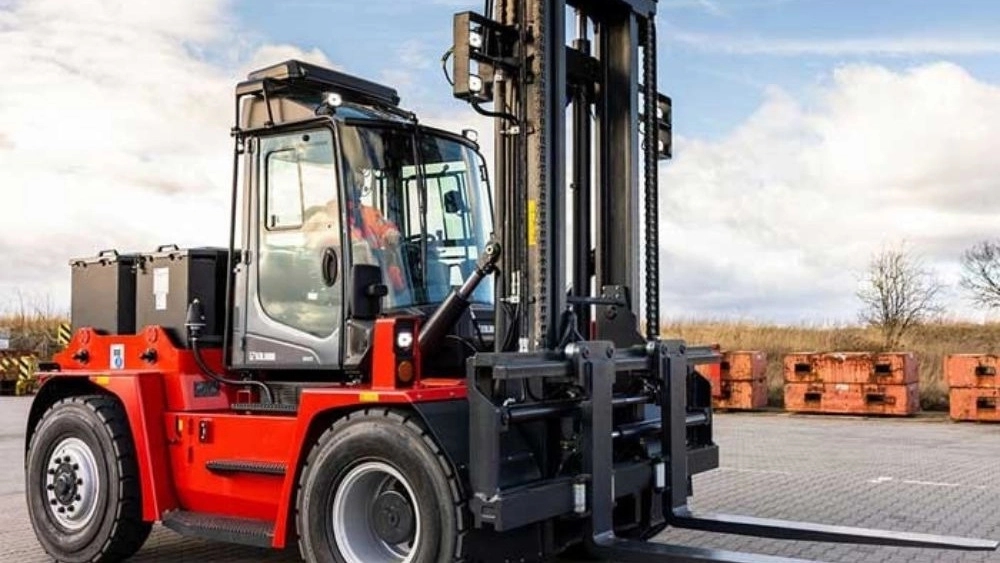
An electric forklift is a battery-powered industrial device used to lift and transport materials in warehouses, distribution centers, manufacturing facilities, and other industrial settings. Unlike internal combustion forklifts that run on diesel or gasoline engines, electric forklifts use batteries to power the electric motor and hydraulic system to provide lifting and handling capabilities. Electric forklifts draw energy from industrial batteries to power the electric motor. they work The engine powers the hydraulic system, which uses hydraulic fluid to operate cylinders that provide lift and tilt functions.
Compared to their internal combustion counterparts, electric forklifts offer a number of advantages, including reduced emissions, noise levels, and more. Less and less maintenance required. They are the most common type of forklift used in indoor warehouses and other facilities where air quality and minimal noise are a priority. Electric forklifts come in different load capacities and configurations to suit different needs. With continuous advancements in battery and charging technologies, electric forklifts are an essential productivity tool for modern material handling operations.
electric forklift engine performance
The engine of this type of forklift uses high-power AC electricity to provide energy, so it is very suitable for reducing fuel costs, and since it is electric, it has a much lower percentage of emissions than similar devices. As mentioned, electric forklifts need 8 hours to charge, and after 8 hours their charging activity is over and they need to be charged again. One of the main advantages of the forklift electric motor is having a warning system. In fact, this system allows the operator to be notified when an accident or malfunction occurs before the device is seriously damaged.
Electric forklifts can be powered by different sources such as batteries or generators. They can also be direct current (DC) or alternating current (AC). DC electric forklifts are less common because they require more maintenance and have slower acceleration speeds than AC types.
Battery electric forklifts are often referred to as battery electric vehicles (BEVs) or battery electric vehicles. (BET) are known. These devices use rechargeable lithium-ion batteries with an average range of about 25 miles per charge. Most models have a regenerative braking feature that can slow down the machine when the forklift is stopped so that energy can be recovered from the brakes and returned to the battery instead of wasting heat.
how the engine works
Electric forklifts work with electric motors instead of internal combustion engines. The electric motor provides the power to drive the wheels or casters to propel the forklift. The engine is connected to a drive shaft that transfers the torque from the engine to the drive wheels. Differentials allow each drive wheel to spin at different speeds during a turn, so the wheels don't slip. The engine also powers a pump for the forklift's hydraulic functions, such as lifting the forks. Electric motors provide instantaneous and variable torque at all speeds. This allows for excellent acceleration and precise control of speed, direction and stopping.
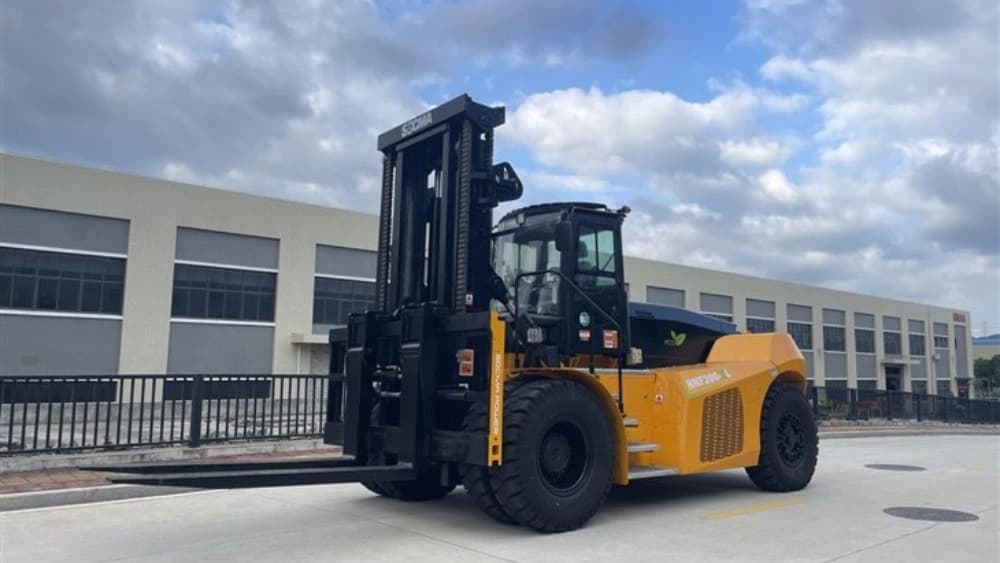
How Hydraulic Functions
The hydraulic system in an electric forklift is what allows the forks to lift and lower loads. It consists of a hydraulic pump, hydraulic cylinders, hydraulic fluid lines and control valves. A hydraulic pump, usually powered by an electric motor, creates hydraulic pressure and forces fluid through the lines. The control valves direct this liquid under pressure to the hydraulic cylinders connected to the mast and forks. When the fluid enters the cylinder, it pushes against the piston, which provides the force necessary to raise the tentacles. When the valve position is changed to release the pressure, the weight of the load causes the prongs to lower. The hydraulic pressure is proportional to the weight of the load on the forks. More pressure is needed to lift heavier loads. Load sensors and pressure control valves are used to prevent system overload.
most important use of electric forklifts
Suitable for places with limited area
Spreading and distributing products
Transferring and moving goods and products in food and health warehouses
Benefits of using an electric forklift
No pollution production
Does not make noise
Low cost of electric forklift
Increased maneuverability in small spaces
Important Tips for Keeping Electric Forklift
✅ Daily inspection and checking of forklift equipment, tires, brakes, etc.
✅ More focus on forklift battery condition and battery charging
✅ It is good to note that the process of fully charging the battery It should be done until the end. ✅ Try to do it in a well-ventilated space when the forklift needs to be charged; otherwise, the charging will not be done completely.
✅ Before turning on the electric forklift, it is necessary to check the battery status indicator, then if you need to charge quickly.
✅ There is no need to buy an electric forklift. We don't have antifreeze, engine oil or oxygen sensor; Because this device does not work according to internal combustion and its driving force is electric power.